Static vs dynamic QR codes: which one do you need?
Static codes encode data directly and work forever. Dynamic codes redirect through a short link you can edit. A plain comparison with the tradeoffs nobody mentions.
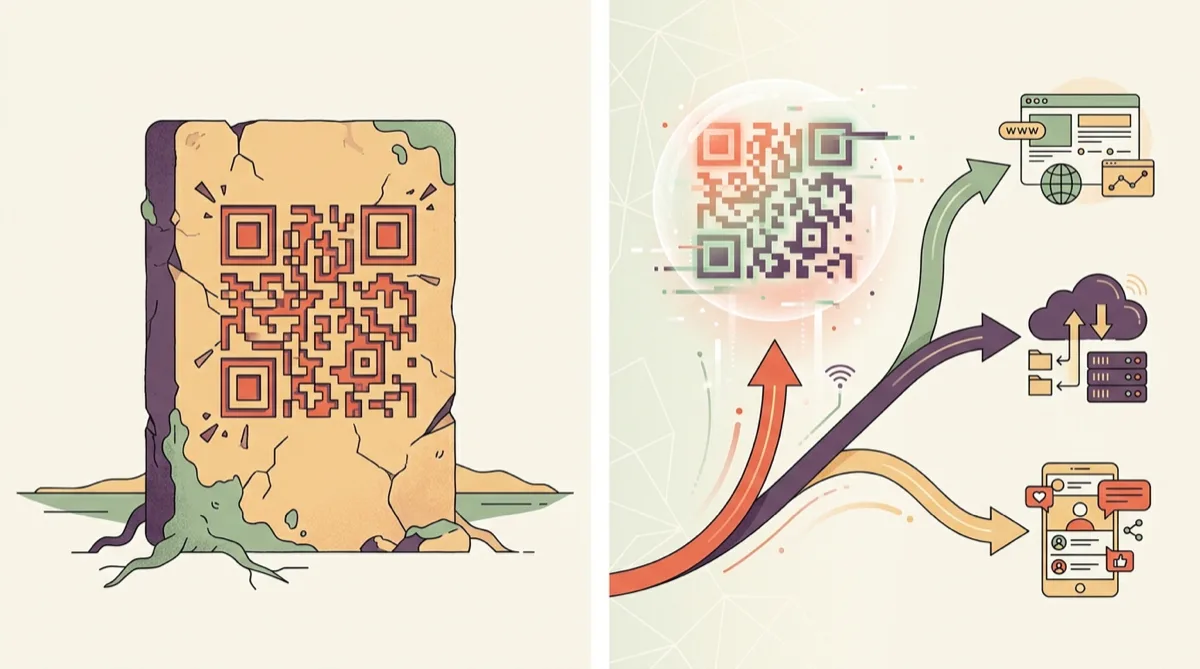
Nearly every QR guide pushes dynamic codes, because dynamic codes are what QR companies sell. They are often the right answer. They are not always the right answer, and the difference is worth understanding before you print.
What each one actually is
A static code contains your data. Type a URL, and the URL itself is encoded into the pattern — longer data makes a denser code. There is no middleman.
A dynamic code contains a short link like yourdomain.com/r/abc123. Scanning it reaches that server, which looks up the real destination and redirects. The pattern stays the same no matter where it points.
Side by side
| Static | Dynamic | |
|---|---|---|
| Editable after printing | No | Yes |
| Scan analytics | None | Yes |
| Works if the provider vanishes | Yes | No |
| Depends on a subscription | No | Usually |
| Pattern density | Grows with your data | Always small |
| Works offline | For Wi-Fi, text, contacts | No, needs a network |
When static is the better choice
- Wi-Fi credentials. The phone joins the network from the code itself, with no internet needed to read it — which matters, because the person scanning has no connection yet.
- Contact cards. A vCard code works in an airport basement with no signal.
- Anything you would rather not depend on a company for. Static codes have no owner.
- Codes you will never need to change. A link to your homepage is not going to move.
When dynamic is worth the dependency
- Anything expensive to reprint — signage, packaging, vehicle livery, billboards.
- Anything whose destination genuinely changes: menus, event schedules, seasonal offers.
- Anything you need numbers for. Scan counts are the only way to know whether a placement works.
- Campaigns where you want to redirect traffic after the fact rather than waste it.
The honest recommendation
Use static for credentials, contacts and anything you want to outlive your relationship with a vendor. Use dynamic for anything printed at cost, anything that changes, and anything you need to measure.
If you go dynamic, check what happens when you stop paying. Many providers deactivate your codes. That turns a print run into waste, and it is the single most important question to ask before committing.
Common questions
- Can I convert a static QR code to dynamic?
- No. The destination is encoded in the pattern, so changing it means generating a new code and reprinting. Decide before the print run.
- Are dynamic QR codes free?
- It varies. Many providers charge for them or cap scans on free plans. QRFable includes dynamic codes and unlimited scans on the free tier, with an ad page shown before redirecting.
- Do dynamic QR codes scan slower?
- Marginally — there is one redirect. In practice the extra step is a few hundred milliseconds and nobody notices.